What We Do
Four capabilities, all performed by us rather than subcontracted. Below is what each one actually involves, what goes wrong when it is done badly, and what lands in your inbox at the end.
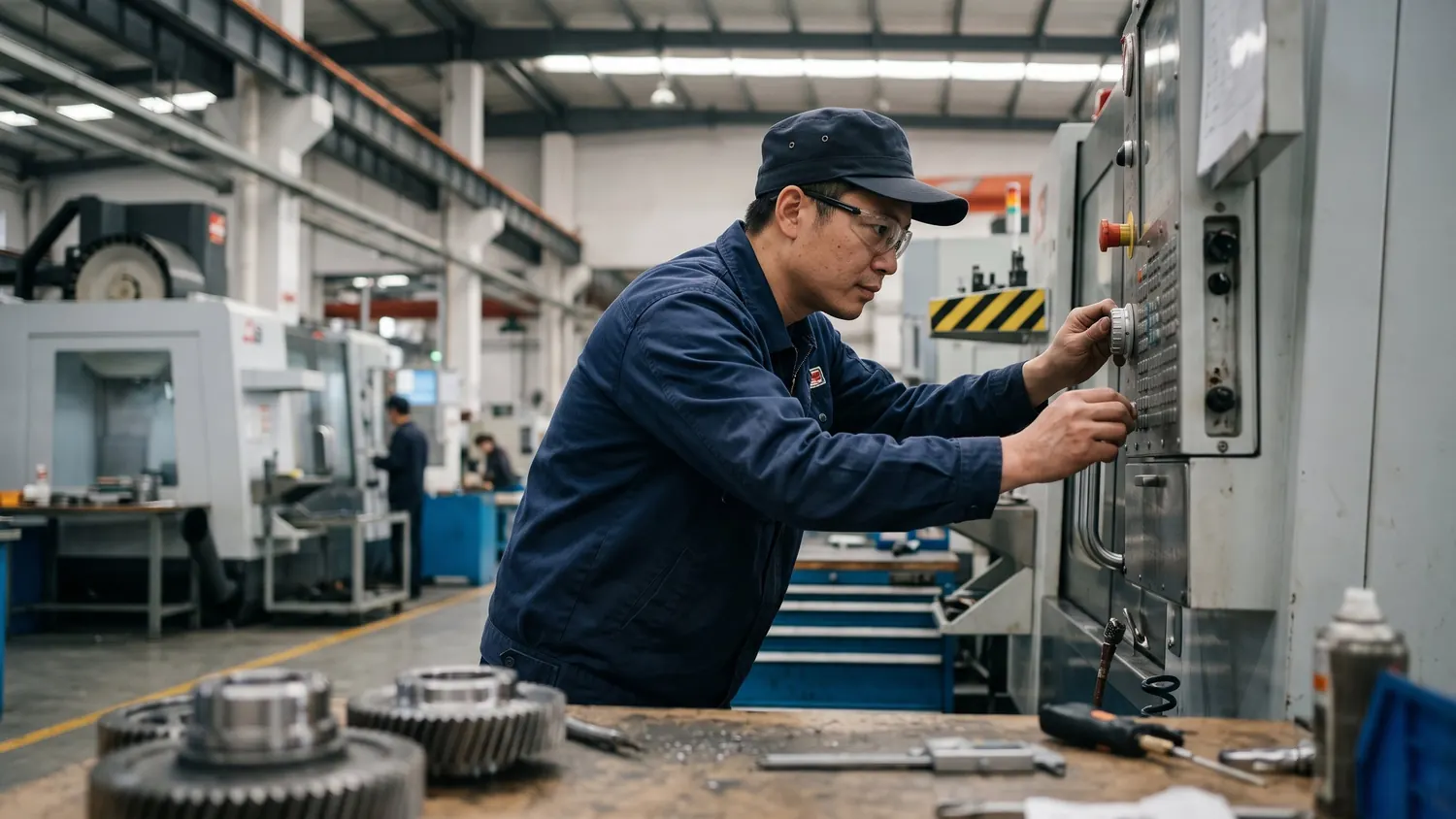
Sourcing and factory audit
Most buyers find a supplier on a marketplace, place a small order, and discover eighteen months later that the plant cannot hold tolerance. The audit exists to run that discovery before your money moves.
What we check, in order.
The business licence first. The registered scope of business has to include manufacturing — 生产, 制造 or 加工. A company whose scope reads 销售 (sales) or 批发 (wholesale) is a trading company, and the price you are quoted includes their margin. That is not automatically disqualifying, but you should know which one you are talking to.
The customs registration number second. Every exporter in China holds a ten-digit registration code tied to a physical address. We check that the address on the code matches the address of the plant we are standing in. Subcontracted production is common and not always disclosed.
The line third. Not the showroom, not the sample room — the line. What we look at is unglamorous: whether the machines are running or covered, whether the raw material store is full or empty, whether there is work in progress on the floor, whether there is a scrap bin and how full it is. A plant with an empty material store and a full scrap bin is a plant that is struggling, whatever the showroom says.
What you get. Three to five comparable quotes, each with the factory name, the unit price at the factory’s own number, tooling and setup costs separated out, lead time, and a note on what each plant is good at and where it is likely to cut corners. Plus our commission as a separate line.
What it costs to skip. The most common failure is not fraud. It is a trading company quoting a factory price plus thirty percent, and the buyer never learning that the plant next door would have done the same job for less — because nobody ever walked into the plant next door.
Inspection and testing
Inspection is the part buyers most often think they have already bought. A third-party inspector who has never seen your drawing will confirm that the cartons contain something of roughly the right shape and weight, and issue a certificate saying so. That certificate will not help you when the parts fail on your line.
What we measure depends on the product. For a diamond segment it is segment height, width and diamond exposure, plus a hardness reading on the bond. For a machined part it is the dimensions on the drawing, with the critical ones called out and measured individually. For a shipment of fasteners it is thread gauge, tensile class and coating thickness. The generic checklist is the thing we specifically do not use.
How much we measure depends on the order. AQL sampling for volume production, one hundred percent inspection for high-value runs and for anything with a safety function. The sampling plan is agreed before the order starts, not after.
What you get. A report with the measured values next to the toleranced values, photographs of the actual goods and the actual cartons, packing list verified against what was ordered, and a statement of what failed if anything did. Written so you can forward it to your own customer without editing it.
The structural point. The balance payment is released to the factory only after the report has been issued to you. That is what makes the inspection real rather than advisory — an inspector with no leverage over the money is producing paperwork.
Consolidation and warehousing
If you buy from four factories, you should not be paying for four shipments, four sets of documents and four customs entries. Consolidation is the boring service that saves the most money.
What happens. Goods arrive at our consolidation warehouse from each factory. We check them in against the packing list, count them, photograph them on arrival, and flag any discrepancy with the factory while the goods are still theirs to fix. Then we relabel to your requirements, build mixed pallets if that is what your warehouse needs, and photograph every pallet before it is loaded.
Storage. Thirty days free on any consolidated order. Longer storage is charged at cost, and we will tell you the number before you need it rather than after.
What you get. One packing list covering every factory, one set of pallet photographs, and one shipment instead of four.
What it costs to skip. Four LCL shipments instead of one container, four sets of export documents, four arrival dates to manage, and four chances for one factory’s delay to hold up everything else.
Freight and documentation
We book the freight ourselves. That is not a claim about being a forwarder — it means you get one party accountable for the whole movement instead of a supplier who says the delay is the shipper’s problem.
Routes. Rail to Europe in twelve to eighteen days door to door. Air to North America in about five days for tooling that cannot wait. Sea for heavy tonnage and for anything where forty days is acceptable and the freight cost is not.
Incoterms. FOB, CIF and DDP are all handled in-house. DDP is the one to be careful with — a supplier quoting DDP to your door is quoting a landed cost they may have estimated from a rate card rather than from your actual address, and the difference shows up as a bill from your customs broker. We quote DDP with the duty calculation shown.
HS classification. Checked before the shipment, not after. A tool classified under the wrong heading can sit in customs for a week while you explain it, and the correction costs more than the classification did.
What you get. One commercial invoice covering every factory in the order, the export declaration, the bill of lading or CMR, and the certificate of origin where your destination requires one.
What we will not do
We will not hold inventory, because a party with stock has something to sell you and the advice stops being free.
We will not accept a commission, rebate or paid factory visit from a supplier. It is written into the service agreement, and it is the reason a factory cannot buy our recommendation.
We will not take a category we cannot inspect. If the only way to verify the goods is a laboratory you do not have access to, the inspection is theatre and we would rather decline the order.
We will not promise a price before we have seen the drawing. Any agent who quotes from a description alone is quoting a guess and will make it up later in the specification.